
Flanges
Male and Female Face Flanges
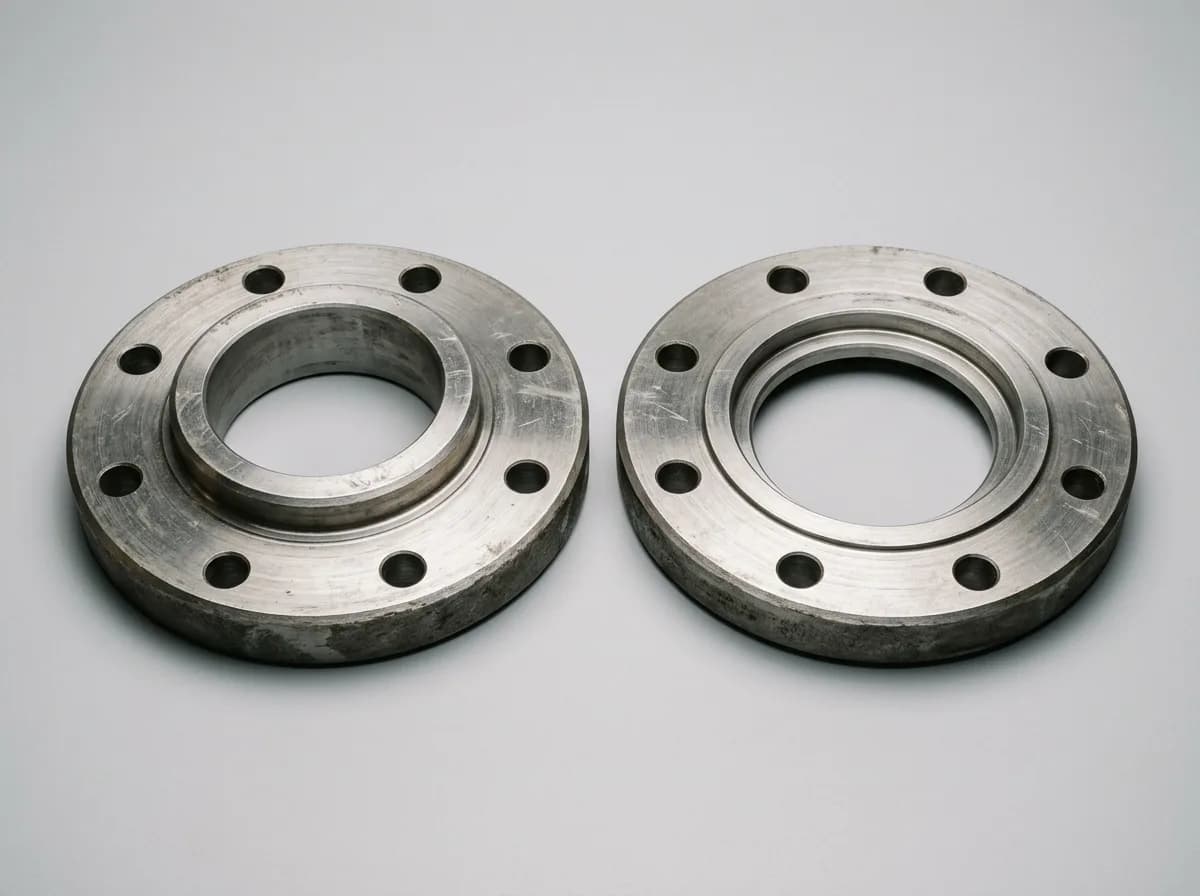
Male and female face flanges, where a raised spigot locates in a matching recess, in stainless, duplex and nickel alloys.
Specification
At a glance
- Facings
- Male face · Female face
- Materials
- Stainless steel 304/304L, 316/316L, 904L
- Alloy 20, Nickel 200, Monel, Inconel, Hastelloy C22
- Duplex 2205
- Titanium, Copper-nickel, SMO 254, Aluminium, Galvanized, MS
As published by Fortune Fittings Private Limited. Grade and availability are confirmed with each enquiry; confirm the governing standard, size and grade when ordering. Spotted a mistake? Please contact us.
Overview
Product overview
Male and Female Flanges play a crucial role in industrial piping systems, offering a reliable method for connecting pipes, valves, and other equipment.
Understanding Male and Female Flanges
Male Flanges feature a protruding, cylindrical extension known as a “stub end,” which fits inside the bore of a female flange. On the other hand, Female Flanges have a recessed area, or “socket,” that fits over the protruding end of a male flange. When bolted together, the male and female flanges create a tight seal, ensuring leak-proof connections in piping systems.
Precision Engineering by Fortune Fittings Private Limited.
With years of industry experience, Fortune Fittings Private Limited has established a reputation for producing high-quality male and female flanges. We offer a wide range of sizes and materials to suit various applications across industries such as oil and gas, chemical processing, and power generation.
Conclusion
Contact us today to explore our product range and request a competitive price list.
Where it is used
Applications and service
Typical duty across the process industries we supply.
- Versatile UsageMale and Female Flanges are used at the ends of pipes, valves, and other equipment in piping systems.
- Secure SealingThe combination of male and female flanges creates a secure and leak-proof joint, minimizing the risk of fluid or gas leakage.
- Interchangeable DesignMale and female flanges can be used interchangeably, providing flexibility in designing piping configurations.
Related
Specified alongside this
Components that commonly appear with it on the same run, and the rest of the flanges range.
 Same rangeWeld Neck FlangeWeld neck flanges to ASME B16.5, ASME B16.47 and EN 1092, including long weld neck, with tables for MS, carbon, stainless and Cr-Mo grades.View specifications
 Same rangeSlip-On FlangeSlip-on flanges to ASME B16.5 and EN 1092-1, flat or raised face, with dimension tables for mild, carbon and stainless steel.View specifications
 Same rangeBlind FlangeBlind flanges to ASME B16.5, ASME B16.47, BS 4504 and EN 1092-1, 1/2″ to 48″, with tables for MS, carbon, stainless and Cr-Mo grades.View specifications
 Same rangeSocket Weld FlangeSocket weld flanges to ASME B16.5 and BS 4504 for small-bore, high-pressure lines, in stainless and carbon steel, with Class 150 tables.View specifications
 Same rangeThreaded FlangeThreaded flanges to ASME B16.5 with NPT or BSP threads for low-pressure lines where welding is not wanted, with Class 150 tables.View specifications
 Same rangeLap Joint FlangeLap joint flanges to ASME B16.5, EN 1092-1 and DIN 2642, used with a stub end, Class 150 to 600, with Class 150 dimension tables.View specifications
Where it is specified
Industries using this component
Sectors that commonly specify the Male & Female Flange, and what else they take from us.
- RefineriesButtweld fittings, flanges and fabricated spools in carbon and alloy steel for crude, product and utility service.View sector
- Petrochemical PlantsDuplex, super duplex and stainless fittings and flanges for corrosive and high-pressure process service.View sector
- Power PlantsAlloy steel buttweld and forged fittings for high-temperature steam, feedwater and condensate circuits.View sector
Enquiries
Need a quotation for the Male & Female Flange?
Send sizes, grades, quantities and the standard the component is specified to, and a sales engineer will come back with availability and pricing. Dimensions and schedules are in the Technical Catalog.