Socket weld vs threaded forged fittings: choosing the right joint
Socket weld or threaded? Compare forged fittings to ASME B16.11 by pressure class, leak risk, inspection and service so you pick the right small bore joint.
 Fortune Technical Desk4 min read
On this page
Small bore piping, usually NPS 2 and below, uses forged fittings joined either by socket welding or by threads. Both are made to ASME B16.11, but they behave very differently in service. Choosing the wrong one is a common source of leaks and rework.
What ASME B16.11 covers
ASME B16.11 covers forged fittings, socket-welding and threaded, in sizes from NPS 1/8 up to NPS 4. Socket weld fittings come in classes 3000, 6000 and 9000. Threaded fittings come in classes 2000, 3000 and 6000. Common materials are ASTM A105 for carbon steel and A182 F304, F304L, F316 and F316L for stainless steel, with A350 LF2 for low-temperature service.
Socket weld joints
The pipe is inserted into a recess in the fitting and secured with a single fillet weld around the outside. The joint is strong, the bore stays almost smooth, and there is no thread to leak. It is the preferred choice for steam, hydrocarbon, high pressure and other demanding services in small bore piping.
Get the expansion gap right
The pipe should be pushed fully to the bottom of the socket and then pulled back by about 1.6 mm (1/16 inch) before welding. This gap lets the weld shrink without cracking. Skipping it is a classic fault and a source of weld-toe cracks in service.
Threaded joints
Threaded fittings are screwed onto pipe cut with tapered threads, normally NPT to ASME B1.20.1. No welding is needed, which makes them attractive for utility lines, instrument air, water and low-hazard services, and for places where hot work is not allowed. The weak point is the thread itself, which reduces the pipe wall, can leak under vibration or thermal cycling and relies on sealant or tape for tightness.
Side by side
Matching class to pipe schedule
The class number is a rating of the fitting body, not a pipe schedule, but the classes line up roughly with common pipe wall thicknesses. Socket weld Class 3000 is generally paired with Schedule 80 pipe, Class 6000 with Schedule 160 and Class 9000 with double extra strong. Threaded Class 2000, 3000 and 6000 are matched to lighter pipe in the same way, with Class 3000 the common choice. Confirm the class against your line design pressure and temperature rather than relying on the pairing alone.
Choosing in practice
- Pick socket weld for process, hydrocarbon, steam and any line you do not want to see leak
- Pick threaded for water, air and low-hazard utilities, or where welding is restricted
- Seal-weld threaded joints only when your specification allows it, and do not rely on seal welds as a fix for a poor choice
- Use the same material for fitting and pipe to avoid galvanic issues, and use stainless steel threaded fittings with suitable anti-seize or PTFE tape
Common fittings in each style
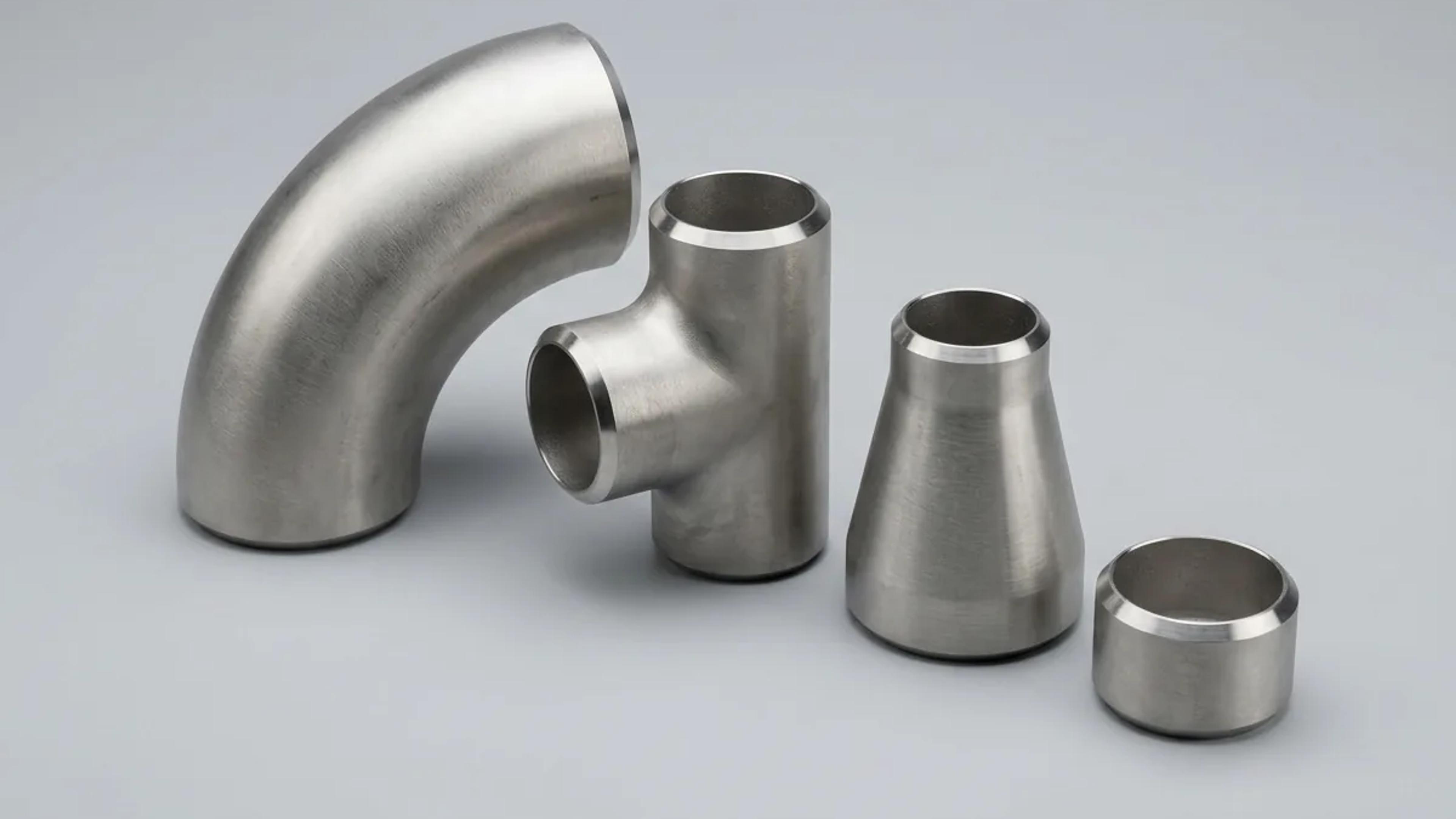
Both styles come as elbows, tees, crosses, couplings, caps, plugs and bushings. Branch connections on larger headers are made with set-on fittings such as weldolets, sockolets and threadolets, which are covered by MSS SP-97.
If you are building a small bore list and are unsure of the class or joint, send it to us. We can quote socket weld and threaded forged fittings against your line class.
Send us your list and we will reply with a quote.
Request a QuoteFrequently asked questions
Can I mix socket weld and threaded fittings on one line?
You can, as long as each joint type is allowed by the piping class for that service. The usual rule is welded joints for the line and threaded only at points such as instrument or drain connections.
What is the largest size in B16.11?
NPS 4. Larger lines normally use buttweld fittings to ASME B16.9 with flanges or welded connections.
Is a Class 3000 fitting the same as Schedule 80?
No. Class is a pressure rating of the fitting. Schedule 80 is a pipe wall thickness. They are commonly paired, but both should be checked against design conditions.